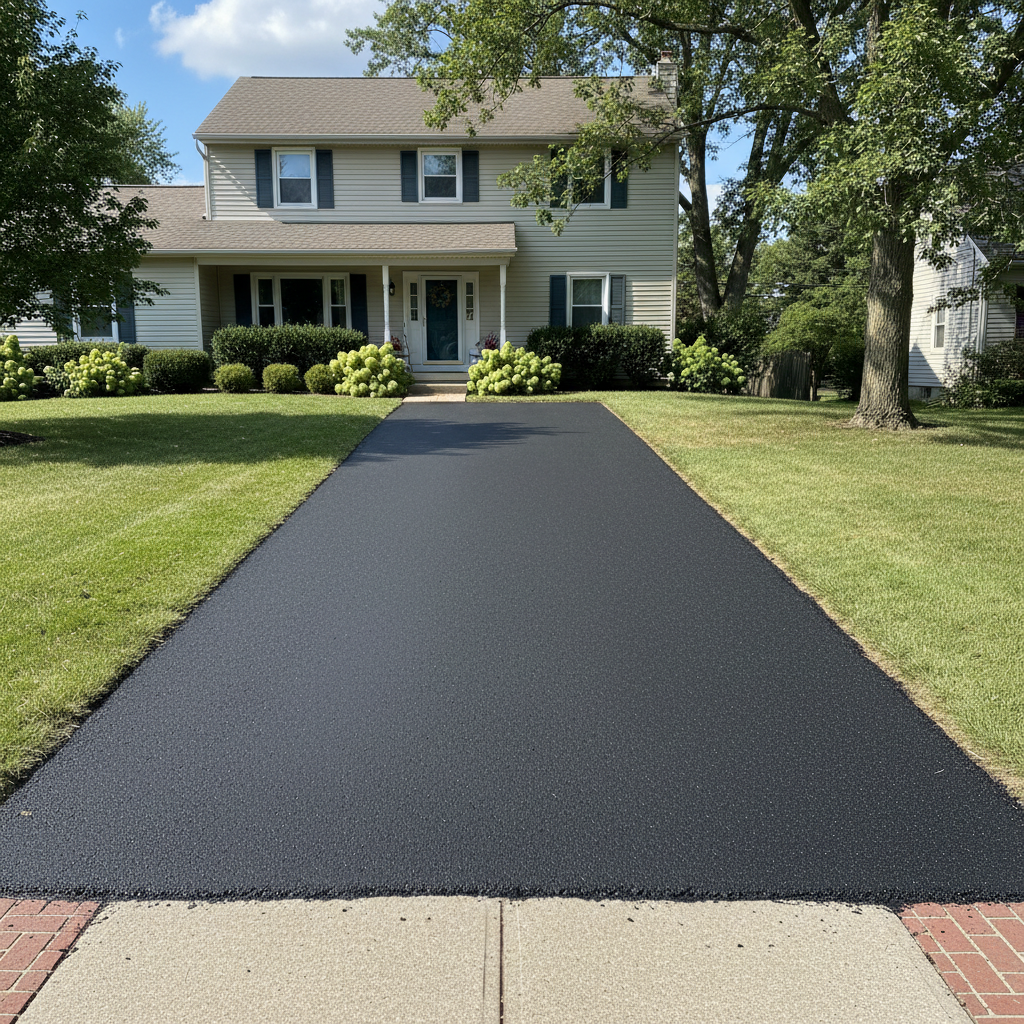
So, you're thinking about getting a new driveway, huh? Maybe your old one's seen better days – cracked all to heck, or just plain tired. Good on you for digging into what it's actually going to cost. I've been laying asphalt here in Cleveland for years, and I can tell you straight up: there's no single price tag for a new driveway. It's not like grabbing a gallon of milk, you know? But I can definitely give you a solid idea of what to expect, and what factors really make that price jump around.
What Makes the Price Go Up or Down?
A few big things will decide how much you'll end up spending on a new asphalt driveway. You really need to think about these before you even bother asking for a quote.
- Size, obviously: This one's pretty straightforward. A bigger driveway means we need more material, more people working, and more time. Simple as that. Most residential driveways around here usually fall somewhere between 400 and 1,000 square feet.
- Current Condition: Is your existing driveway just a thin layer of old asphalt that needs a quick refresh? Or are we talking about ripping out an old concrete slab that's been sitting there since the 50s? If we have to haul away a lot of old stuff, especially concrete, that means extra time, extra equipment, and more disposal fees. Getting the sub-base right is super important, and if the ground underneath is a total mess, well, that's just more work for us.
- Material Thickness: You might figure thicker is always better, and for how long it lasts, it usually is. But it also means we're using more asphalt. A standard residential driveway typically gets 2-3 inches of asphalt laid over a good aggregate base. Some homeowners want more, and that's fine – but it does add to the overall cost.
- Drainage and Grading: This is a huge factor, especially with our wild Cleveland weather. You absolutely don't want water pooling up on your driveway or, worse, running right towards your house's foundation. Proper grading and good drainage solutions, like catch basins or French drains, are absolutely essential. If your property has tricky slopes or the natural drainage isn't great, we might need to do some extra earthwork to get it just right.
- Accessibility: Can we easily get our heavy equipment onto your property? Or is it a really tight squeeze, maybe in a crowded neighborhood like Ohio City, where parking and maneuvering big trucks is a complete headache? The harder it is for us to get our gear in and out, the more time it takes, and as they say, time is money.
- Permits: Sometimes, depending on what we're doing and local rules, you might need a permit. We'll take care of that part, but it's another small cost that gets added in.
What Do Driveways Cost in Cleveland?
Alright, let's get down to brass tacks. For a typical residential asphalt driveway in Cleveland, you're generally looking at a range. And remember, these are just averages – your specific situation could land on the lower or higher end.
A regular 2-car driveway (think 400-600 sq ft) with standard removal and a solid base will probably run you anywhere from $3,500 to $7,000. If your driveway is bigger, say 800-1,000 sq ft, or if we're dealing with a ton of old material to remove, complex grading, or special drainage needs, that price can easily climb to anywhere from $7,000 to $12,000+. These numbers cover everything: digging it out, prepping the base, the asphalt itself, and compacting it all down.
Just keep in mind, these prices are for a full-depth replacement. If you're only getting an overlay (which isn't always an option, depending on how bad the existing driveway is), it'll be less. But honestly, I usually recommend a full replacement for the best long-term value, especially with our crazy freeze-thaw cycles around here.
What Should a Quote Include?
When you get a quote from All Star Asphalt Inc, or any good company for that matter, it should be pretty detailed. Don't settle for a one-line email with just a price, seriously. Here's what you should expect to see:
- Excavation and Removal: How much old material is coming out and where it's going.
- Base Preparation: Specifics on the type and thickness of the aggregate (crushed stone). This part is absolutely critical for a driveway that lasts.
- Asphalt Layers: How many layers and the total thickness once it's compacted.
- Grading and Drainage: Details on how they'll manage water flow.
- Compaction: Confirmation that the asphalt will be properly rolled and compacted.
- Cleanup: What they'll do to leave your property neat and tidy.
- Warranty: What kind of guarantee they offer on their work.
How to Avoid Paying Too Much
Nobody wants to get ripped off, right? Here's my best advice for making sure you get a fair price and a quality job:
- Get Multiple Quotes: This is a no-brainer. Grab at least three detailed quotes from different, reputable contractors. It helps you compare apples to apples, after all.
- Check References and Reviews: Don't just take their word for it. Look at their past projects, read online reviews, and definitely ask for references.
- Ask Questions: If something in the quote isn't clear, just ask. A good contractor will be happy to explain everything.
- Don't Always Go for the Lowest Bid: The cheapest option often means someone's cutting corners somewhere. A super low bid usually suggests they're using less material, less experienced labor, or skipping crucial steps like proper base prep. You'll definitely pay for it in repairs down the road.
- Verify Insurance and Licensing: Make sure they're properly insured and licensed. You really don't want to be liable if something goes wrong on your property.
- Get Everything in Writing: Every single detail, every cost, every warranty – it all needs to be in a written contract before any work even starts.
A new driveway is a big investment in your home. Do your homework, ask the right questions, and pick a contractor you truly trust. It'll save you a ton of headaches and money in the long run.