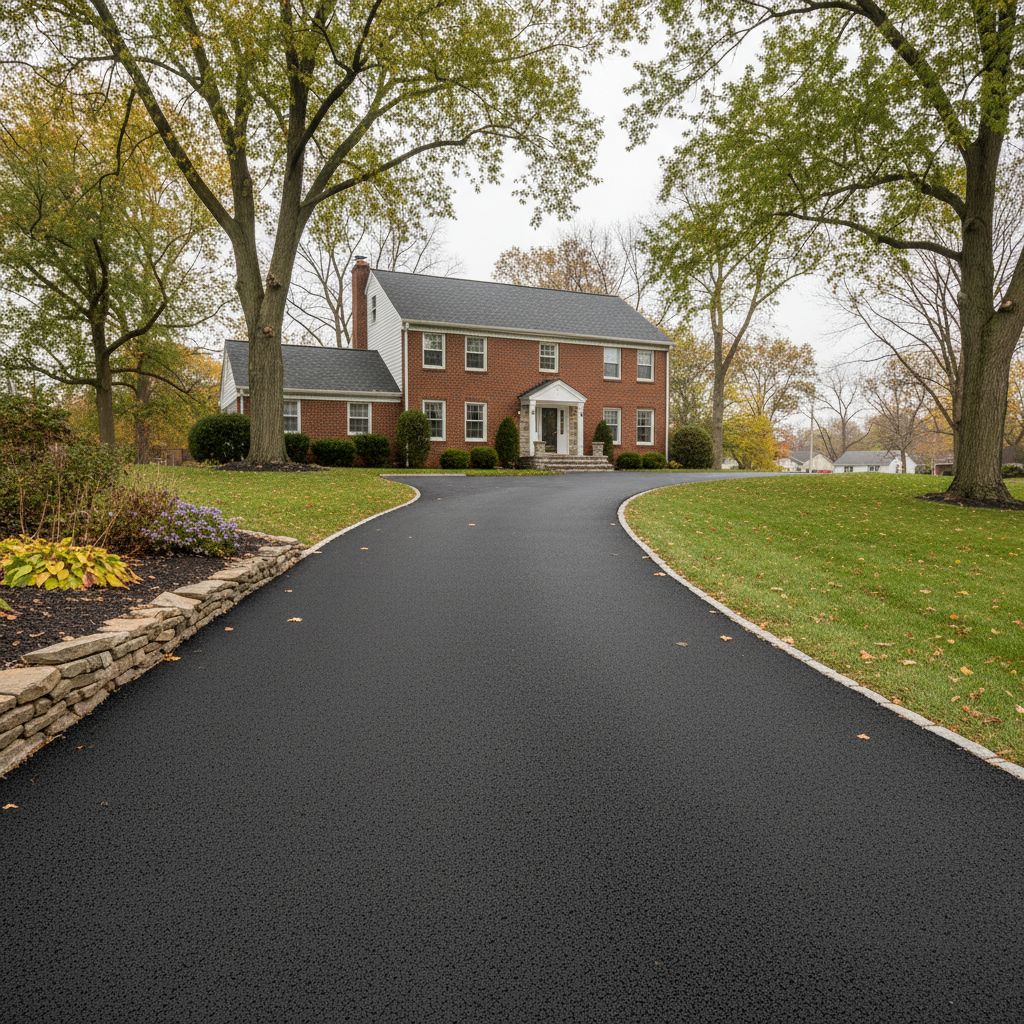
So, you're thinking about a new driveway, or maybe fixing up the old one? That's great. But hold on a second before you dial a number or sign anything. Let's chat about some common traps I've seen Cleveland homeowners fall into. These aren't just minor annoyances; they can turn into real headaches, and often, much bigger bills later on.
Mistake #1: Not Getting Multiple, Detailed Bids
This one's a classic, isn't it? People get one quote, maybe two, and figure they're all set. Or even worse, they just pick the cheapest option without really understanding what they're paying for. You wouldn't buy a car without checking out a few models, right? Your driveway's a big investment, too, after all.
When you're asking for bids, don't just ask for a price. Dig into the details. How thick will the asphalt be? Are they ripping out the old stuff completely, or just paving right over it? What about the base? Here in Cleveland, with our crazy freeze-thaw cycles and sometimes squishy clay soils, a solid, well-packed base is absolutely critical. If a contractor isn't even talking about preparing the base, that's a huge red flag. You need to compare apples to apples, and that's impossible if the bids are super vague.
Mistake #2: Ignoring the Sub-Base and Drainage
This point connects to the last one, but it's so important it really needs its own section. I honestly can't count how many driveways I've seen fail way too soon because either the homeowner or the last contractor skimped on what's underneath. The asphalt itself? That's just the top layer. The real work, the stuff that makes your driveway last, happens way below the surface.
A good sub-base gives your driveway stability and helps water drain away. If water gets trapped under your asphalt, especially with our cold Cleveland winters, it's going to freeze, expand, and crack your driveway faster than you can even say 'pothole.' A good contractor will check out your site's drainage, maybe suggest a French drain, or make sure the driveway has a slight slope to shed water. If they're only talking about laying down asphalt and not mentioning what's underneath or where the water will go, well, be careful.
Mistake #3: Falling for the 'Too Good to Be True' Deal
Oh, we've all seen them: the guys who just show up out of nowhere, say they just finished a job down the street, and happen to have "extra" asphalt they can lay for super cheap. Or that flyer with a ridiculously low price. My advice? Turn around and run. Seriously, run fast.
Reputable contractors, like us at All Star Asphalt Inc., are usually pretty busy. We're not typically going door-to-door with leftover materials. These "deals" almost always mean shoddy work, thin asphalt, no proper base, and then a disappearing act when problems pop up. You'll end up paying twice – once for the cheap job, and again for a real contractor to come fix it. If a price seems way too low compared to other bids, there's almost always a reason, and it's rarely a good one for you.
Mistake #4: Not Checking References and Insurance
This might seem obvious, but people still skip it. They see a nice truck, a friendly face, and just assume everything's on the up and up. Don't assume anything. Ask for references. Call those people. Ask them about their experience, how professional the crew was, and if the contractor stood behind their work. A good contractor won't bat an eye at providing them.
Even more critical: insurance. Ask for proof of liability insurance and workers' compensation. If a worker gets hurt on your property and the contractor isn't properly insured, you could be held responsible. That's a risk you absolutely do not want to take, believe me. Any legitimate business will have these documents ready to go.
Mistake #5: Not Getting Everything in Writing
Verbal agreements are worth about as much as the paper they're printed on. Which is to say, nothing at all. Get a detailed contract that spells out absolutely everything: the work they'll do, the materials they'll use (what type and thickness of asphalt, what base material), the project timeline, when you'll pay, and all the warranty info. What kind of warranty do they offer? How long does it last? What exactly does it cover?
A clear contract protects both you and the contractor. It sets expectations and gives everyone a roadmap for the project. If a contractor seems hesitant to put things in writing, that's a massive warning sign. You want clarity, not confusion, especially when you're putting thousands of dollars into your property.
Look, getting a new asphalt driveway isn't rocket science, but it does take a little homework on your part. By steering clear of these common mistakes, you'll dramatically boost your chances of getting a high-quality, long-lasting driveway that you won't regret for years to come.