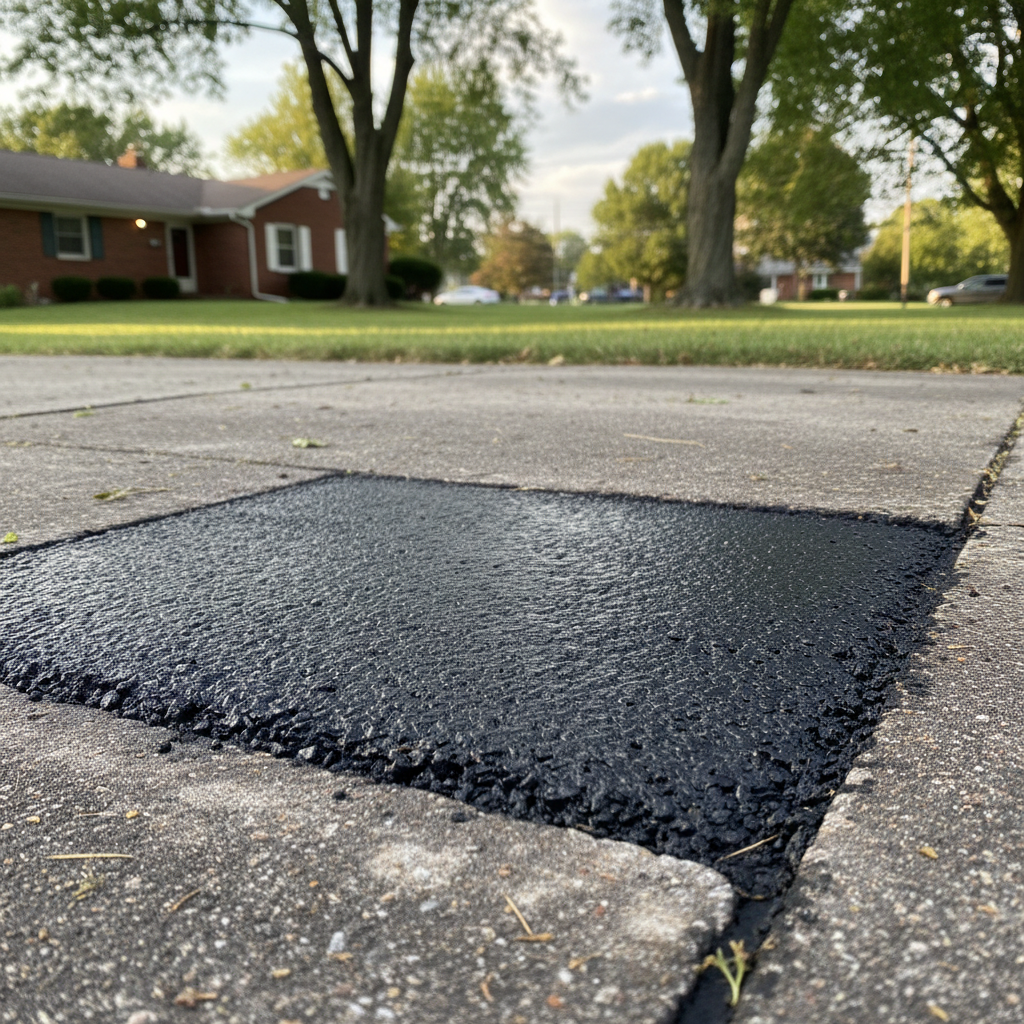
Got a pothole? Or maybe you're seeing those spiderweb cracks spread across your driveway? Whatever the issue, you're probably staring at your asphalt, wondering what to do next. I get calls about this kind of stuff all the time, so I figured it'd be helpful to just lay out the answers to the most common questions folks ask me about asphalt patching.
What's the difference between patching and sealing?
This is a big one, and people often get them mixed up. Think of it this way: patching is like fixing a cut. You're dealing with a specific damaged spot – a pothole, a deep crack, or an edge that's falling apart. We cut out the bad stuff, clean it up, and then fill it with fresh asphalt. It's a structural repair. Sealing, on the other hand, is more like putting a fresh coat of paint on a fence. It's a protective layer that goes over the entire surface of healthy asphalt. It helps stop new damage, guards against UV rays and water, and makes everything look sharp. You patch first, then seal, if your whole driveway needs that refreshed look.
What makes asphalt fail and need patching here in Cleveland?
Oh man, where do I even begin? Our Cleveland weather is a huge factor. You've got those brutal freeze-thaw cycles every winter – water seeps into tiny cracks, freezes, expands, and then thaws, leaving bigger cracks or potholes. That's probably the number one culprit, honestly. Then there's heavy traffic, especially on residential driveways if you've got delivery trucks or RVs coming and going. Poor initial installation, believe it or not, is another one; if the base wasn't prepped right from the start, it's going to fail sooner rather than later. Oil spills, tree roots growing underneath, and just plain old age and neglect all play a part too. It's usually a combination of things, but that freeze-thaw cycle really does a number on us here.
Can I just patch it myself?
You can, but I'll tell you straight: it's rarely a long-term fix. You can buy cold patch asphalt at the hardware store, and it's fine for a super temporary, emergency fix – like if you've got a dangerous pothole you need to fill immediately. But it doesn't bond well, it breaks down quickly, and it's just not designed to last. For a proper, durable patch that'll hold up to our winters, you need hot mix asphalt, specialized equipment for cutting and compacting, and the know-how to prep the area correctly. If you want it to last, you're better off calling in All Star Asphalt Inc or another pro.
How long should a good asphalt patch last?
A properly installed, professional asphalt patch using hot mix asphalt should last several years, often 5 to 10 years, sometimes even longer, depending on the type of patch and the conditions it faces. It's not going to last as long as a brand new driveway, but it'll definitely outlast any cold patch job by a mile. The key is proper preparation: cutting out the damaged area cleanly, making sure the base is solid, and compacting the new asphalt correctly. If it's a small, isolated patch on an otherwise healthy driveway, it can blend in and hold up really well. If you're patching a huge section of a really old, failing driveway, it might not last quite as long because the surrounding asphalt is already weak, you know?
What kind of patching methods do you use?
We mainly use a few methods, depending on the damage. For potholes and larger, isolated areas, we often do a 'cut and patch' or 'remove and replace.' That means we cut out a neat, rectangular section around the damage, remove all the old material, clean and prep the base, and then fill it with fresh, hot asphalt and compact it. For smaller cracks, we might use crack filling, which is a different process where we clean out the crack and fill it with a flexible, rubberized sealant. Sometimes for really widespread but shallow damage, we might recommend an overlay, but that's a whole different ballgame than just patching specific spots.
When is it too late for patching, and I need a new driveway?
That's the million-dollar question, isn't it? If your driveway has more patches than original asphalt, or if the underlying base is completely shot, patching isn't going to do much good. Look for widespread alligator cracking (where it looks like alligator skin), significant heaving or sinking across large areas, or if you're seeing water pooling everywhere because of major drainage issues. If you're constantly patching new spots every few months, it's usually a sign that the whole thing is at the end of its life. We can come out, take a look, and give you an honest assessment. Sometimes a few well-placed patches can buy you a few more years, but sometimes it's just time to bite the bullet and get a fresh start.
Will the patch match my old asphalt perfectly?
Honestly? Probably not perfectly, at least not right away. New asphalt is black, really black. Your existing asphalt has been exposed to the sun, rain, and snow for years, so it's faded to a lighter gray. When we put down a fresh patch, it's going to stand out. Over time, usually within a few months to a year, the new patch will start to fade and blend in better with the older asphalt. If you really want it to look uniform, your best bet is to get the whole driveway sealcoated after the patch has had a few weeks to cure. That'll give everything a consistent, fresh black look.
What should I do after a patch is installed?
Give it some time! Hot mix asphalt needs to cure. We'll tell you how long to stay off it, but generally, you want to avoid driving or parking heavy vehicles on it for at least 24-48 hours, sometimes longer if it's a thick patch or a really hot day. Don't turn your steering wheel sharply while stationary on the fresh patch – that can scuff it up. After that initial curing period, just treat it like the rest of your driveway. Keep it clean, address any new cracks that pop up early, and consider sealcoating the whole thing down the line to protect your investment.
Hopefully, that clears up some of the questions you've got about patching your asphalt. If you're in the Cleveland area and you've got a spot that needs fixing, don't hesitate to give us a call at All Star Asphalt Inc. We're happy to come out and take a look.