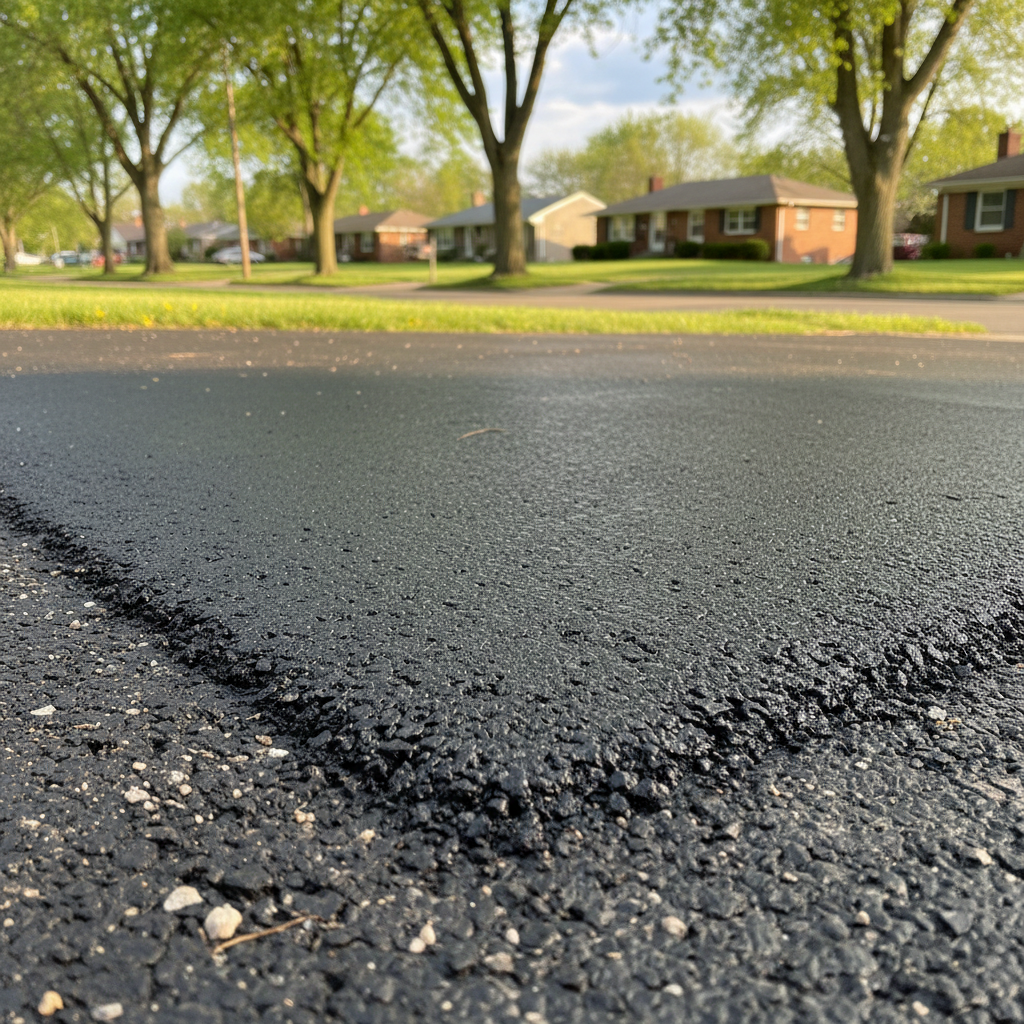
Alright, let's talk about asphalt patching. I get a lot of calls from folks around Cleveland, from Parma to Shaker Heights, asking about their driveways and parking areas. Usually, it's about a pothole that's gotten out of hand or some cracks that are starting to look like a spiderweb. You've got questions, and I've got answers based on years of getting my hands dirty in this business. So, here are the most common things people ask me about patching their asphalt.
Can I just patch this myself? What's the real difference between DIY and professional patching?
You *can*, but you probably shouldn't, not if you want it to last. Look, I get it, you see bags of cold patch at the hardware store and think, 'Hey, I can save some money.' And for a tiny, temporary fix, sure, it might hold for a bit. But cold patch is just that – a temporary band-aid. It's not designed to bond permanently or withstand our harsh Cleveland winters with all the freeze-thaw cycles we get. It'll get brittle, it'll crack out, and you'll be patching it again next year, or worse, the problem will just get bigger underneath.
When we do it, we're using hot asphalt, which is a completely different animal. We're also preparing the area properly – cleaning out debris, cutting a clean edge, and compacting the base. That's crucial. A professional patch, done right, integrates with your existing pavement and stands up to traffic and weather much better. It's an investment that saves you headaches and more money down the line.
What kind of patching methods do you use, and which one is best for my situation?
There are a few ways to skin this cat, and the best one depends on what's going on with your asphalt. We're not just throwing asphalt in a hole and calling it a day. Here are the main ones:
- Saw-Cut & Remove (Cut & Patch): This is the gold standard for potholes or larger areas of significant damage. We saw-cut around the damaged section, remove all the old, bad asphalt, clean out the base, and then fill it with hot asphalt. This creates a strong, durable repair that integrates with the surrounding pavement. It's what you want for lasting fixes.
- Infrared Patching: This is a pretty cool technique for smaller, shallower areas or for repairing seams. We use an infrared heater to soften the existing asphalt around the damaged spot, add new hot asphalt, and then rake and compact it all together. It creates a seamless repair because it blends the old and new asphalt. It's efficient and effective for certain types of damage.
- Skin Patching (Surface Patching): This is generally for very shallow depressions or minor surface irregularities. We clean the area, apply a tack coat, and then spread a thin layer of hot asphalt over it. It's less invasive but also less durable than a full-depth repair. We'll tell you if this is appropriate, but often, it's not the first choice for a serious pothole.
We'll always assess your specific situation and recommend the method that'll give you the best, longest-lasting results.
How long does an asphalt patch typically last in Northeast Ohio?
That's a great question, and it really depends on a few things. If it's a properly done saw-cut and remove patch using hot asphalt, and the underlying base is stable, you're looking at several years, easily. I've seen patches hold up for five, seven, even ten years or more if they're maintained and the surrounding pavement isn't completely falling apart.
But here's the kicker: the lifespan of the patch is often tied to the overall condition of the rest of your asphalt. If your whole driveway is old, cracked, and has a failing base, a patch is still just a patch. It'll fix that specific spot, but new problems might pop up nearby. Think of it like putting a new tire on a car with a failing engine – it fixes one problem, but the bigger issue is still there. We aim for repairs that last, but we'll also be honest if your pavement is past the point where patching is the most economical long-term solution.
What causes potholes and cracks in the first place? And can I prevent them?
Mostly, it's water and traffic, especially around here. Water gets into tiny cracks, then freezes and expands (hello, Cleveland winters!), pushing the asphalt apart. When it thaws, it leaves a void, and then traffic drives over it, causing the asphalt to collapse and form a pothole. It's a vicious cycle.
Other culprits include:
- Poor drainage: If water sits on your pavement, it's going to find its way in.
- Heavy loads: Parking heavy vehicles on residential driveways not designed for them.
- Sun exposure: UV rays dry out the asphalt binder, making it brittle and prone to cracking.
- Age: Asphalt just gets old and less flexible over time.
Prevention? Good drainage is key. Make sure water is flowing off your driveway, not pooling. Regular sealcoating every few years is also huge. It puts a protective layer over your asphalt, sealing those tiny cracks and protecting it from water and UV damage. It's like sunscreen for your driveway. Catching small cracks early with crack filling also stops them from becoming big potholes.
How long after patching can I drive on it?
With hot asphalt patching, you can usually drive on it pretty quickly. We're talking hours, not days. Once the asphalt has cooled down and compacted, it's ready for traffic. Usually, we'll tell you to give it at least a few hours, maybe half a day, especially if it's a hot day, just to let it really set up. We'll make sure it's good to go before we leave the job site, and we'll give you specific instructions. You won't be stuck waiting around forever.
Is there a 'too far gone' point where patching isn't worth it?
Absolutely. There definitely is. If your asphalt looks more like a jigsaw puzzle than a smooth surface, or if you've got alligator cracking spread across a large area, or if the base underneath is clearly failing and sinking in multiple spots, then patching is just throwing good money after bad. You'll patch one spot, and another will pop up right next to it. At that point, you're better off looking at a full asphalt overlay or even a complete remove and replace. We'll give you an honest assessment. My team at All Star Asphalt Inc. isn't here to sell you something you don't need; we're here to give you the right solution for your pavement's condition and your budget.
Don't hesitate to give us a call if you've got a problem area. We'll come out, take a look, and give you the straight scoop on what needs to be done.